
- sales@iiservz.com
- Plot 6 Naina Components, Sector 140, Pin Code : 201305 Noida, India




Why Gig Workers and Contract Employees Need Background Verification Too
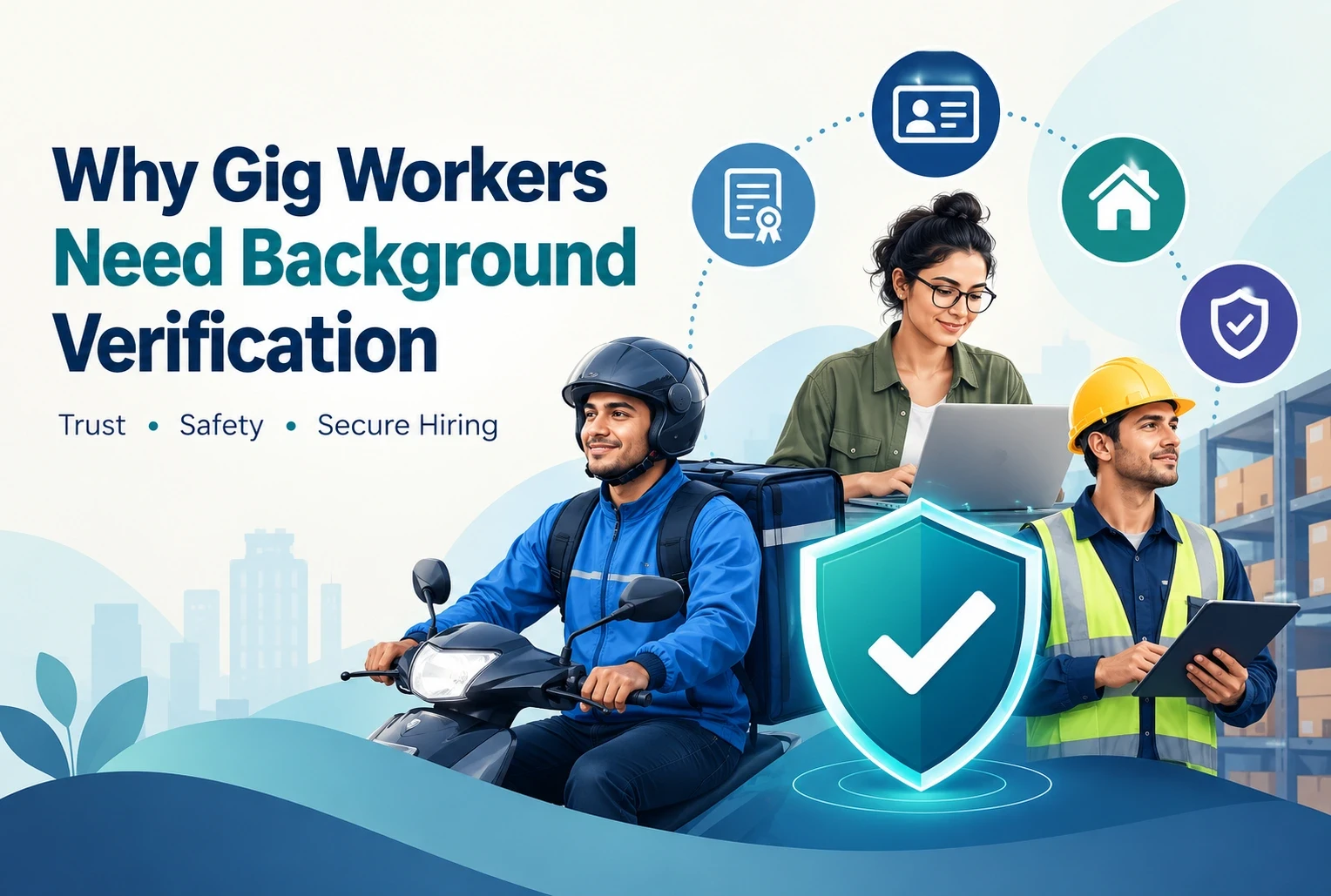
Nowadays, the workforce is not just composed of permanent employees who work full-time. In the modern world of business, organizations depend on independent workers, freelancers, delivery personnel, temp workers, as well as contracted employees to help them perform their tasks correctly and cope with fluctuating demands and requirements.
With this kind of hiring, we see some advantages. Companies get an access to specialized skills, can build teams instantly, and use independent workers for short-term tasks. However, with the fast hiring comes the challenge of proper screening.
Many people still link background checking with only permanent workers. This might lead to some drawbacks as to the fact that those hired temporarily or by other companies could have contact with customers, get access to information of the entity and represent it.
Verification of employees’ background is as important for gig and contracted workforces as for permanent ones. It helps organizations check the efficiency and credibility of their employees to avoid the possible risks and threats.
1. Why Background Verification Matters for Gig and Contract Hiring
While gig and contract laborers may not follow the same format of employment as full-time workers, their role can be equally significant.
For instance:
- Digital delivery partners connect with consumers directly.
- Contract laborers may enter the premises of the organization.
- Freelancers may look after confidential organizational information.
- Field technicians may visit clients’ homes or businesses.
- Temporary workers in warehouses may come in contact with valuable inventory.
Without efficient screening, organizations may lose against fraud from identity theft, fake credentials as well as false work history.
According to a report concerning screening of the Indian workforce, discrepancies in verification were noted in 5.61% of gig workers’ profiles recorded in the first half of FY2026, as compared to 4.33% among white-collar employees.
2. Common Risks of Hiring Without Verification
Avoiding background checks brings about challenges with regard to operations and name.
Some of the usual risk factors are:
- False identity: An employee can use a false or wrong identity.
- Faulty employment records: Someone might have presented a wrong working experience.
- Wrong addresses: Wrong addresses can block one from knowing the employee’s identity.
- False certificates: Somebody can present a false degree or working permit.
- Safety reasons: In certain professions, a background check is a safety requirement.
- Possible data breach: The contractors can get access to sensitive data on the organizations.
3. Which Background Checks Should Businesses Conduct?
Based on the job responsibilities, industry, and degree of access, the verification procedure should be framed. Some checks which firms should keep in mind are given below:
Verification of Identity
It is the process of checking whether the information about the worker’s identity is authentic.
Address Verification
It helps to verify the working or permanent address provided by the candidate.
Verification of Employment
It is used to verify employment history of the worker, including business name and employee history.
Verification of education and qualification
The academic degree and necessary certifications for the job assigned are checked.
Checking Criminal Record
This may apply if the position includes client visits, sensitive operations, or responsibility for safety aspects. It must comply with applicable regulations and privacy act.
Checking Professional References
Reference checking helps a firm learn its employee’s past job record and behavior.
Not all gig workers require the same types of checks. A delivery worker, software freelancer, and contract accountant would need to go through different checks.
4. Why Gig Workers Need a Different Verification Approach
Conventional employee vetting practices tend to emphasize the need for steady work, as candidates usually have continuous employment records with their previous employers. The backgrounds of gig economy individuals could be quite dissimilar from those of employees. For instance,
- They may work for many companies at once;
- They may work for short contracts;
- They may have breaks between contracts;
- They may work independently using their skills;
- They may change their location depending on the assignment.
Thus companies that want to hire gig employees should adopt flexible screening measures that reflect the concept of gig work.
For instance, previous experience on platforms, references, and documents confirming the identity can prove to be more valuable than traditional employment history.
5. How Background Verification Supports Business Operations
A proper screening process does not only discover differences.
It helps organizations achieve better management of their personnel.
Major advantages are:
- Improved safety in the workplace: The right screening procedures lead to safer contacts with both customers and employees.
- Less danger in employing people: The verification process reveals inconsistencies before assigning responsibilities to Selected Candidates.
- Better customer trust: Clients are more prone to trusting companies that perform responsible screening practices.
- Better information security: Screening allows companies to check potential workers to enter sensitive data.
- Consistent hiring policy: Well-established process guarantees that aspects of the temporary and permanent hiring are managed properly.
Background screening is not a full assurance of protection from all risks. Yet it provides organizations with good basis for making decisions about staff management.
6. How Technology Makes Verification More Efficient
The process of manual verification might look like too cumbersome for companies who hire hundreds or thousands of temporary employees. However, technology is able to make this process easier through:
- Digital document submission and verification.
- Automation of verification process.
- Incorporation of API into hiring process.
- Taking advantage of centralised verification reports.
- Creation of status tracking as well as discrepancy management systems.
HR teams and managers are able to have an access to the greater amount of verification without having to rely on the manual process.
7. Choosing the Right Background Verification Partner
Companies in search of trustworthy screening services ought to assess services based on their capacity and operational needs.
While comparing the top background verification companies in india, it’s important to pay attention to the following.
- Verification coverage: Is the company capable of conducting background checks like identity, address, employment, education, etc.?
- Technology: Can the verification process be integrated into existing HR systems?
- Data security: Does the company use candidates' documents and data responsibly?
- Scalability: Is the company able to deal with massive and location-specific recruitments?
- Reports: Is the verification information provided in a clear manner?
- Turnaround time: Does the company meet the onboarding process deadlines?
The right provider partner should understand the differences between temporary, contract, and full-time employment instead of imposing universal guidelines on every case.
8. How IISERVZ Supports Employee Background Verification
Businesses require an effective verification process for all types of employees.
IISERVZ offers risk management and background verification services to assist companies in confirming the details provided by job applicants facilitating a more informed hiring process.
IISERVZ can conduct checks for education, previously held jobs, and identity and address verification using a highly automated process.
The verification process is especially important for firms that employ contract or gig workers, as it enables them to:
- Confirm applicants’ details.
- Discover inconsistencies in the applicants’ accounts
- Control the screening process for each job.
- Automate the process of verification.
By integrating background checks into their hiring processes, businesses can ensure they are employing honest and reliable people.
Conclusion
Gig workers and contract employees are an essential part of modern business operations. However, flexible hiring should not mean compromising on workforce verification.
From identity and address checks to employment and qualification verification, businesses should adopt screening processes that reflect the responsibilities of each role.
Employee background verification is not limited to permanent hiring. It is an important part of responsible workforce management that helps businesses protect their operations, customers, and reputation.
Frequently Asked Questions (FAQs)
Is background verification necessary for gig workers?
Yes. Gig workers may interact with customers, handle assets, or access business information, making appropriate screening important.
What checks are important for contract employees?
Identity, address, employment, education, and relevant criminal record checks may be considered based on the role.
Can companies verify freelancers before hiring them?
Yes. Businesses can verify freelancer identities, professional credentials, previous experience, and references before assigning projects.
How does employee background verification reduce hiring risks?
It helps identify incorrect information, credential discrepancies, and potential concerns before onboarding.
Should businesses conduct background checks on third-party employees?
Yes. Businesses should establish suitable screening requirements for third-party workers based on their responsibilities and level of access.
How can businesses manage background verification for large gig workforces?
Digital workflows, automation, and API integrations can help streamline high-volume verification. Providers such as IISERVZ offer technology-enabled background verification solutions.
How do businesses choose a background verification company in India?
They should evaluate verification coverage, accuracy, data security, technology, scalability, and reporting before selecting a provider.