
- sales@iiservz.com
- Plot 6 Naina Components, Sector 140, Pin Code : 201305 Noida, India




The Role of Background Verification in Modern Recruitment
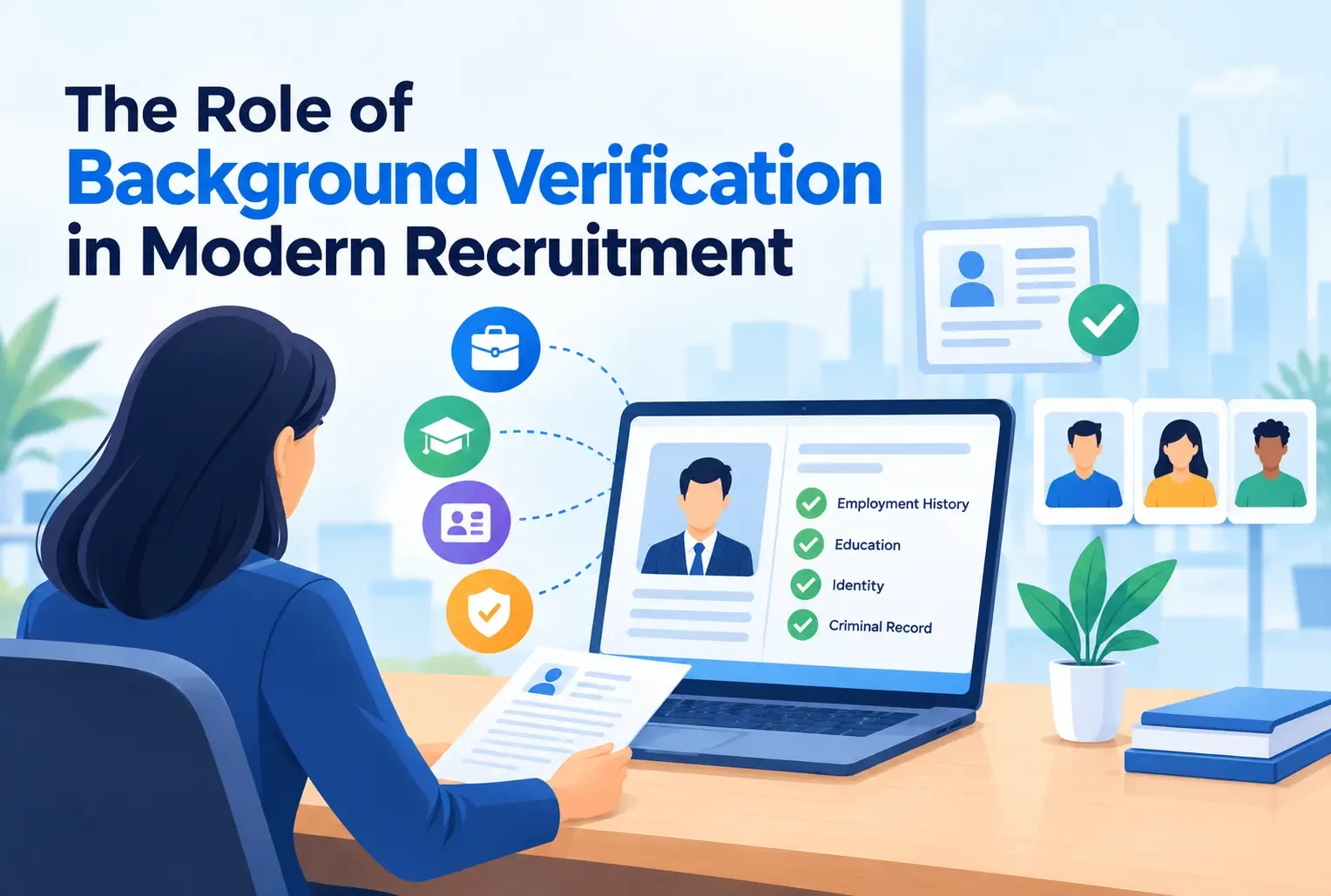
The process of recruitment has experienced major changes since the advent of electronic applications, remote working, global recruitment, and rapid recruitment processes. Companies can access a larger talent pool now, which also means that they must find effective tools to check the validity of key information provided by candidates.
A resume and interview are sources of information regarding the potential employee’s abilities and experience but do not provide sufficient verification. Verification of backgrounds allows organizations to validate the necessary information and establish a more systematic approach towards recruitment.
For companies involved in business in the Philippines, the method is important since enterprises seek to cooperate with a workforce that is becoming more and more heterogeneous and dispersed geographically. Professional background verification companies in Philippines can help employers by establishing the correct methods for choosing candidates, as well as by streamlining the efforts of HR departments in the screening process.
Why Background Verification Has Become Part of Modern Recruitment
The choices made about hiring can impact the productivity of the organization, the workplace, the clients, as well as the risks associated with operation within the company. A person might seem to fit the position perfectly after analyzing the qualifications and conducting the interviews, but it does not guarantee that the employer will be able to trust all the information submitted for the position.
The procedure of background check adds another phase of taking care of the process before or during the hiring process.
The goal is not to assume that the information the candidates provide is necessarily wrong. The background check gives another opportunity to confirm the details and detect the details that bear questions.
This is especially crucial for positions in which employees have access to sensitive information, money, customers’ records, buildings, and any other important systems of the enterprise.
Moving Beyond Resume-Based Hiring
Even though resumes are still of great importance for the hiring process, they are based on information that job seekers provide. Recruiters examine resumes to analyze candidates’ career development, qualifications, responsibilities, and skills.
Nonetheless, it is important for companies to have some corroborative proof.
To illustrate, the applicant may say that he/she has several years of experience in one and the same organization. Verification enables understanding that relevant employment data provided by the applicant is true.
At the same time, it is worth mentioning that educational credentials are of great importance in cases where job-seeking candidates are required to have specific diplomas, certificates, or licenses.
Thus, background verification is a supplementary tool while it is not a substitution for interviews, testing, or any other hiring practice.
How Verification Supports Better Hiring Workflows
With a structured verification procedure, HR departments can conduct screening processes effectively.
Instead of treating various candidates in different manners, companies can clarify verification conditions set for various job positions and/or employee categories which allows for creating a more standardized hiring process.
For instance, a company may create one screening approach for employees in entry-level positions, another one for those working in financially-related posts, and a different one for senior employees.
Having a procedure in place simplifies tracking the various pending cases as well as ensures the timely completion of the activities required as part of candidate verification.
Background Verification and Remote Recruitment
Remote recruitment has allowed businesses to expand their recruitment geography. Companies can hold their interviews and onboarding and not ask candidates to come to the office in the early stages of recruitment.
While this can offer some flexibility in recruitment, it can also complicate certain validation processes.
HR professionals need to validate information about candidates living in different regions, working in different places, and getting an education in some other regions.
Companies can use available digital verification processes to conduct the validations without a need for manual coordination of the processes.
The Importance of Consistency in Verification
A consistent background verification approach is one of the major positive sides of having background verification procedure in place.
When it is up to individual departments and recruiters to choose the method of verification, the organization may run the risk of losing uniformity in terms of background checks. Only some candidates will receive intense screening, while others will be subject to minimal verification despite having similar job positions.
Depending on specific roles in the company, the framework should provide organizations with a chance to develop coherent requirements.
Consistency allows one to improve internal record-keeping as well.
What Happens When a Discrepancy Is Found?
Discrepancies in background checks do not mean that candidates are guilty of providing false information. Factors responsible for discrepancies can include variations in job titles, employment dates, institutional records, documentation, etc. Hence, organizations need to have a formalized process in place to investigate discrepancies.
Depending on the situation, a candidate may be required to furnish explanations or additional documentation. The HR team can use the information gathered during the investigation in line with the corporate recruitment policies.
Having a systematic approach helps avoid making a decision based only on partial information.
Balancing Recruitment Speed With Due Diligence
Recruiters are typically tasked with hiring quickly, especially if the organization is growing quickly or has immediate recruitment needs, but this doesn’t mean that they should skip on the verification process.
Organizations should focus on improving efficiency instead. Using digital workflows, centralized case management, automated notifications, and integration with recruitment systems will eliminate unnecessary delays.
The aim is to implement processes that allow for efficient onboarding while being thoroughly met with the requirements of due diligence.
Data Privacy in Background Verification
Background verification involves the collection and processing of personal information. This makes data privacy an important consideration for organizations and verification providers.
In the Philippines, the Data Privacy Act of 2012 establishes requirements for the processing and protection of personal information. The National Privacy Commission emphasizes principles including transparency, legitimate purpose, and proportionality when processing personal data.
Organizations should therefore consider how candidate information is collected, stored, accessed, shared, and retained as part of their verification process.
Privacy should be incorporated into the design of the screening workflow rather than addressed only after verification has been completed.
The Role of Background Verification Companies in the Philippines
Organizations may choose to manage some verification activities internally or work with specialist providers depending on their recruitment requirements.
Background verification companies in Philippines can support employers by managing verification workflows, coordinating different checks, providing reports, and helping organizations handle screening across multiple locations.
Businesses that typically have to hire many people can also benefit from outsourcing their verification work in that it will lessen the amount of work that falls on their in-house human resources teams. Recruiters can then be free to devote more time to sourcing candidates, interviewing, engaging them, and gearing up for the onboarding process, while the actual verification takes place according to a predetermined structure.
Determining the appropriate verification provider will depend on factors such as the organization’s volume of hires, structure of workforce, geographical needs, technology set-up, and verification requirements.
IISERVZ Background Verification Services in the Philippines
IISERVZ has been providing background checks and risk reduction services to businesses in the Philippines and other overseas countries. The company claims that it has a presence in the Philippines and has been meeting verification needs in more than 100 countries.
The various services offered by IISERVZ include employment verification, educational verification, identification verification, address verification, and other background verification services, both in physical and online forms. Another thing to note is that IISERVZ offers technology-backed to automation (including using APIs) solutions to help organizations link processes of verification with their existing processes of recruitment and human resources.
This enables organizations to manage their verification operations according to their staffing needs while ensuring transparency in the screening process.
Building Verification Into the Recruitment Strategy
Verification of background is transforming into a part of the recruitment process rather than just an independent process.
Firstly, companies should decide which positions require verification, what methods of validation would be appropriate, and what information should be given to potential employees.
Secondly, companies would need to find out if the checks should be carried out internally or by an outside company. For example, if companies conduct their hiring in different regions of the Philippines, they should get help from an experienced verification provider.
The Future of Background Verification
It is expected that contemporary recruitment will change in the future owing to remote hiring, digitized onboarding, transnational recruitment, and novel forms of labor being adopted by many organizations. Despite the changes, the importance of valid data concerning candidates will last. Background checks give employers one more source of information, which may support their findings from resumes, interviews, evaluations, and recommendations.
The most effective approach is not necessarily the one involving the greatest number of checks. Instead, organizations should develop verification processes that are relevant to their roles, proportionate to their requirements, respectful of candidate privacy, and practical for their recruitment workflows.
For employers in the Philippines, professional background verification companies in Philippines can play a role in helping organizations build structured and consistent screening processes that keep pace with the changing nature of recruitment.