
- sales@iiservz.com
- Plot 6 Naina Components, Sector 140, Pin Code : 201305 Noida, India




Remote Hiring and Identity Fraud: How Employers Can Verify Candidates
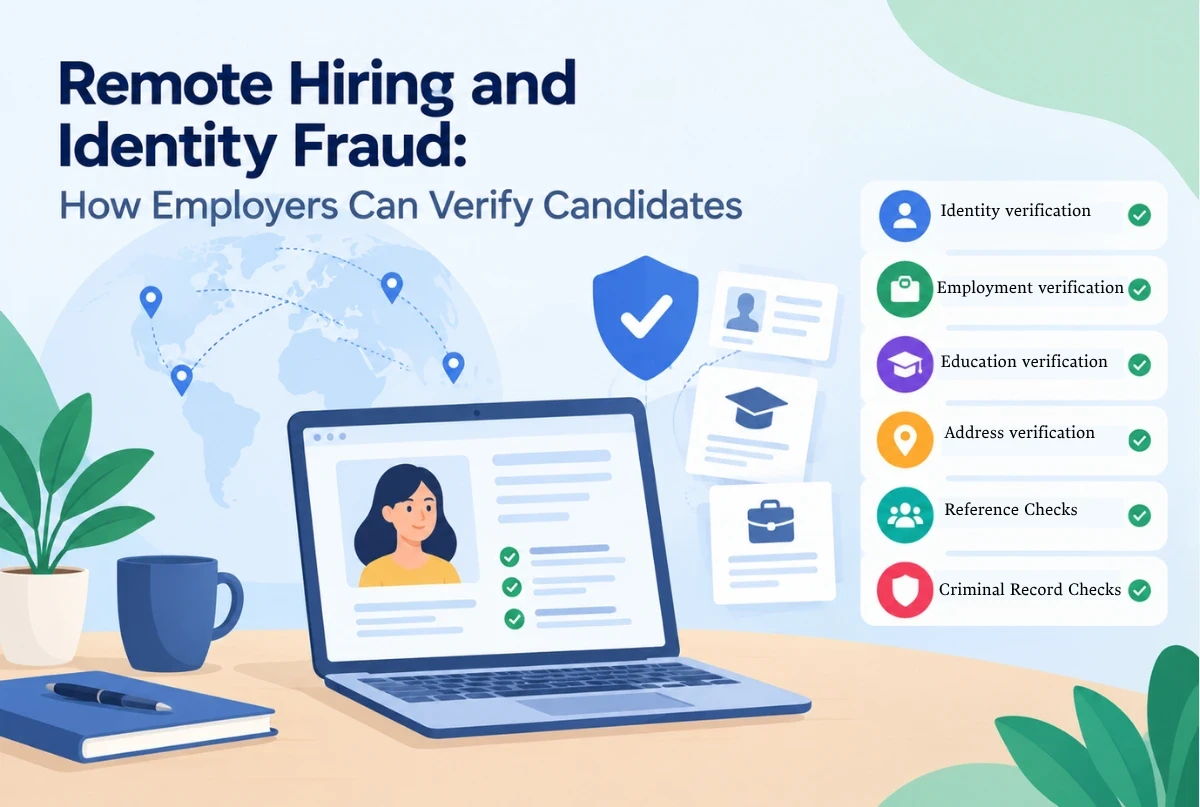
Remote and hybrid hiring has enabled companies to search for talent wherever they want. Interviewing, evaluating candidates, processing documents as well as onboarding has all migrated online, eliminating geographical constraints and allowing employers to connect with talents from more places than before. However, the digital world has presented other challenges for employers when it comes to verifying the accuracy of the candidates' data.
Among the risks involved in recruiting based on only online data, the main ones are verification issues, fraudulent resumes, false employment records, as well as impersonation. Due to this fact, employee background verification is becoming a very important aspect of hiring process.
Why Remote Hiring Creates New Verification Challenges
Conventional recruitment practices allow candidates the opportunity to attend interviews in person, review documents together with recruiters/HR representatives, which helps to confirm a person's credentials.
When it comes to remote recruitment, the situation is different. A candidate can complete a hiring process without ever being present at the office of the company. Their CV goes via email, the interview is conducted on Skype, and verification is done online.
However efficient this type of recruitment is, it is complicated by fact that HR representatives cannot independently verify the candidate's information. The resume itself cannot confirm the identity of the candidate, previous jobs and education. That is why a background verification service is needed.
What Is Identity Fraud in Recruitment?
Identity fraud in recruitment occurs when false or misleading information regarding the identity of an applicant is shared, or when the identity of another person is used at any point during recruitment.
The forms that this type of fraud takes may vary. For instance, a person may give incorrect personal details about themselves or present documents that are not theirs, or mislead interviewers in a remote assessment or interview.
It is important to understand that discrepancies do not automatically mean fraud. Inconsistencies may arise because of administrative mistakes, outdated information, differences in how organizations record names, or misunderstanding about employment date.
Hence, verification should take into account the discrepancies and give a way to check them.
Why Resume Screening Alone Is Not Enough
Recruiters will skim resumes to assess the experience, qualifications, competencies, and professional background of the job applicants. However, the information included in resumes is often self-reported.
For example, when a candidate says that he or she has years of experience in one of the previous companies, the recruiter may take this experience into account when processing the application of the job seeker, but the employment verification will be able to confirm the validity of the statement independently.
The same goes for education. A degree written in the CV may suffice at first, however, the verification of education will provide more evidence that it has been achieved.
The significance of this differentiation is that since recruitment in the modern world is becoming more and more dependent on digital information, independent verification can help companies go beyond what they were told by candidates.
Which Checks Can Help Verify Remote Candidates?
A verification framework should be tailored to the organization's requirements and the nature of the role. Common checks can include:
Identity verification: Helps establish that the candidate's identity information corresponds to the individual being considered for employment.
Employment verification: Confirms relevant details about previous employment, such as organization, designation, and employment period, depending on the verification process.
Education verification: Helps validate degrees, certifications, institutions, and other academic credentials provided by the candidate.
Address verification: Provides an additional method for validating residential information where required.
Professional reference checks: Can provide supplementary information about previous professional associations and work experience.
Criminal record checks: Where legally permitted and relevant to the role, these may form part of the organization's broader screening framework.
The appropriate combination depends on factors such as job responsibilities, industry, location, organizational policy, and applicable legal requirements.
How Technology Can Strengthen Verification
Technology has an important role in making verification more efficient. Manual screening can involve multiple emails, phone calls, documents, spreadsheets, and follow-ups. These processes become increasingly difficult when organizations recruit hundreds or thousands of employees.
A technology-enabled background verification service can centralize verification requests and provide visibility into their progress. Digital workflows can help HR teams initiate checks, manage documentation, monitor status, and access reports through a centralized platform.
API integrations can take this a step further by connecting verification systems with applicant tracking systems, HRMS platforms, or onboarding software. Instead of entering the same information repeatedly, relevant candidate data can move between connected systems through defined workflows.
Automation can also help with repetitive administrative tasks. However, automated systems should be supported by appropriate human review when results contain discrepancies or require additional investigation.
What Should HR Teams Look for in a Verification Provider?
Selecting a verification provider should involve more than comparing turnaround times and pricing.
Accuracy and verification methodology should be considered first. Organizations should understand how information is sourced and how discrepancies are handled.
Data security is equally important. Background verification involves personal, educational, employment, and other sensitive information. Employers should consider the provider's processes for collecting, processing, storing, and protecting candidate information.
Technology capabilities can be important for organizations with large recruitment volumes. APIs, automation, dashboards, digital reports, and integrations can reduce administrative work and improve process visibility.
Geographic coverage should also be considered by companies hiring across multiple cities or countries. Verification requirements and available sources can differ by location.
Finally, scalability matters. A provider should be able to support the organization's requirements as hiring volumes, locations, and workforce structures change.
Balancing Candidate Experience With Verification
Verification should not unnecessarily complicate the candidate journey. Lengthy forms, unclear communication, repeated requests for documents, and poor status visibility can create frustration for applicants.
Organizations can improve the experience by explaining the purpose of verification, communicating requirements clearly, requesting only relevant information, and providing a predictable process.
Digital verification workflows can help reduce unnecessary back-and-forth between candidates and HR teams. When candidates know what information is required and what stage their verification has reached, the process becomes easier to manage.
At the same time, organizations should ensure that screening practices remain consistent and appropriate for the role and comply with applicable requirements.
When Should Employee Background Verification Take Place?
The timing of verification depends on the organization's recruitment policy and applicable requirements. Some businesses initiate checks after a conditional offer, while others may conduct specific checks at earlier stages.
What matters is having a clearly documented process. HR teams should establish when verification begins, which checks apply to different roles, who reviews results, and how discrepancies are addressed.
This approach can prevent verification from becoming an inconsistent activity handled differently by individual recruiters or departments.
IISERVZ for Structured Employee Verification
IISERVZ tops among the background verification companies in India that specializes in background checking and risk management solutions for firms that need employee verification services. It offers services involving employee verification, education background checks, identity checks, domicile checks, and many other checking services using high-tech process automation.
The company also provides API integration and automation services that allow organizations to connect the checking processes with their HR or recruitment system. According to the organization, it has more than seventeen years of operating in the industry, serves over three hundred enterprises, and satisfies verification needs of companies from over one hundred countries.
The company’s combination of verification solutions and high tech makes it a viable provider of background checks services to organizations that operate in many regions and do recruitment on a large scale.
Building Trust Into Remote Recruitment
The remote hiring process will probably continue to be crucial for organizations to identify and employ new talent. Notably, the advantages of recruiting online need to be counterbalanced by the correct ways to establish a candidate's information.
Employee background verification give companies a safe method to confirm relevant information during the hiring process. If done correctly, employee background checks can support a more consistent recruitment process when supported by correct identity verification, employment verification, education verification, and secure technology.
A reliable background verification companies in India can also reduce the administrative burden on HR teams by bringing multiple verification activities into a structured workflow. The goal is not to make recruitment unnecessarily complicated, but to establish an appropriate level of confidence in the information on which employment decisions are based.
As recruitment continues to become more digital, organizations that build verification into their hiring processes can create a more systematic approach to candidate due diligence while maintaining efficiency and a clear candidate experience.