
- sales@iiservz.com
- Plot 6 Naina Components, Sector 140, Pin Code : 201305 Noida, India




How Global Workforce Mobility Is Changing Background Verification in the Middle East
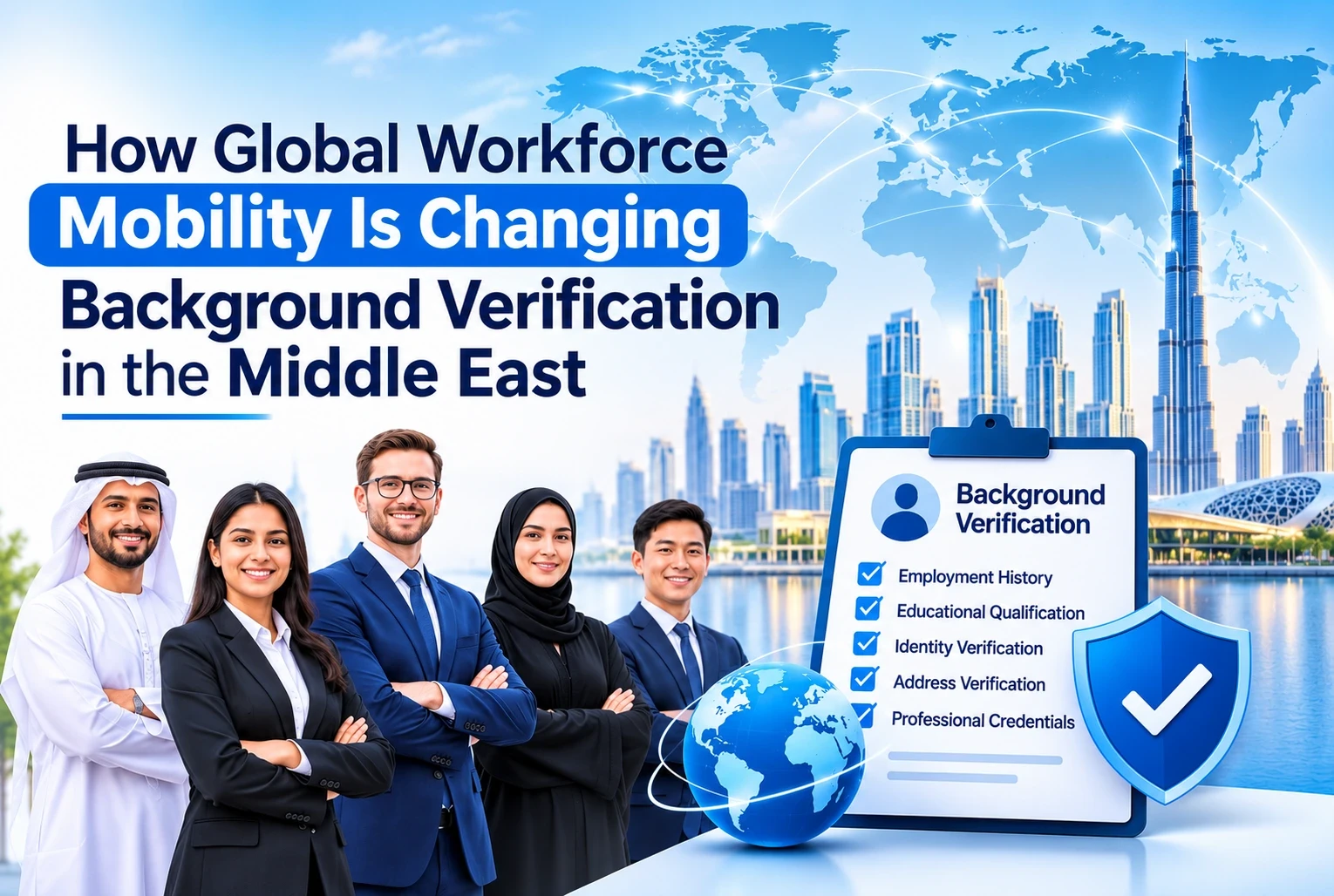
For talent from around the world, the Middle East has grown in importance. Professionals from various nations and sectors are hired by organizations throughout the region. This diversity in the workforce opens up new business opportunities. Additionally, it raises issues with a candidate's employment history and credibility.
A candidate may have experience from one nation and credentials from another. It's possible that their former employers used completely different systems. Conventional hiring evaluations become more difficult as a result.
Background verification companies in Middle East are growing in importance as global hiring grows. Reliable information is becoming more and more important to employers when making hiring decisions.
A Workforce That Crosses International Borders
The way that organizations approach hiring has changed due to workforce mobility. Employers are no longer limited to applicants who live nearby.
Professionals relocate in search of better opportunities. In order to meet their needs for specialized talent, businesses also hire from abroad.
This movement raises a number of verification issues:
- Various educational systems: Different academic structures may be followed by qualifications.
- International employment records: Former employers may have conducted business in several different countries.
- Diverse documentation: Employment and identity documents vary by nation.
- Differences in language: Documents may need to be translated or further interpreted.
- Different verification practices: Institutions may respond to requests in different ways.
The evaluation of candidates may take longer as a result of these variations. Employers require trustworthy data from pertinent sources.
Why Traditional Hiring Methods Are No Longer Enough
An outline of a candidate's career path can be found in their resume. Interviews are a useful tool for evaluating suitability, communication, and experience. Neither, however, independently verifies every detail.
This restriction is more apparent when hiring from abroad. Recruiters might not have direct access to foreign organizations or employers.
For instance, a candidate might say they have worked overseas for a number of years. Their accomplishments and responsibilities may be impressive on their resume. Still, the organization needs proof.
In a similar vein, local recruiters might not recognize international qualifications. Independent verification of their legitimacy and issuing institution might be necessary.
For this reason, organizations are focusing more on structured verification. Beyond application materials and interviews, it fosters confidence.
How Employee Background Verification Supports International Hiring
Employers can validate crucial information provided by candidates by using employee background verification. When candidates have a history of employment or education abroad, it becomes especially pertinent.
The position and related risks should determine the scope. Several areas of verification may be taken into consideration by employers.
-
History of International Employment
A candidate's prior employment history can be used to determine their professional background. Employers might have to verify prior employment periods, titles, and organizations.
When former employers do business abroad, this can be difficult. These needs can be met by verification partners with an appropriate global reach.
-
Verification of Educational Qualification
International applicants may have degrees from universities in various nations. Employers must have faith in these credentials' legitimacy.
Verification can assist in confirming the qualification details and the issuing institution. This is particularly crucial for jobs that are regulated and specialized.
-
Verification of Identity
Identity checks assist in determining whether the applicant's information corresponds with what is on file. Different identity documents and issuing authorities may be involved in international recruitment.
Employers should employ the proper verification techniques for each jurisdiction. Additionally, personal data must be adequately protected.
-
Verification of Address
For some positions and organizational needs, residential information might be pertinent. Candidates from other countries may have resided in multiple nations.
Verifying an address can assist in confirming pertinent residential information. The approach should take into account relevant requirements and local availability.
-
Certifications and Professional Credentials
Certain licenses or professional certifications are necessary for some jobs. Employers ought to verify the authenticity and applicability of these credentials.
This matters particularly in technical, financial, healthcare, and regulated industries.
The Growing Importance of International Verification Networks
The geographic reach of a verification provider may affect how effective it is. Access to a variety of sources is frequently necessary for international hiring.
A supplier who is accustomed to one nation might not be able to fulfilll all international requirements. Therefore, it is important for organizations to know what the provider actually covers.
Employers should take into account the following when assessing Middle Eastern background verification firms:
- Global reach: Is the supplier able to facilitate checks in all pertinent nations?
- Local expertise: Does it comprehend verification requirements unique to a given country?
- Source reliability: Are conclusions backed up by reliable sources?
- Language capabilities: Is the provider able to handle records in multiple languages?
- Data protection: Do relevant laws govern how personal information is handled?
- Reporting standards: Are results consistently and clearly presented?
Coordination problems can be lessened with the aid of a robust global network. Coverage claims, however, ought to be evaluated in light of actual requirements.
How Technology Is Changing Cross-Border Verification
Technology is improving the organization of international screening. Document collection and verification coordination can be facilitated by digital workflows.
Additionally, they can assist employers in handling high hiring volumes. This is helpful for companies that hire people in different places.
Among the significant advancements are:
- Digital document review: Facilitates the review of potential documents.
- Automated workflows: Assists in planning follow-ups and verification requests.
- API-based integration: Links recruitment systems and verification services.
- Centralized reporting: Facilitates the review of screening results.
- Digital identity checks: Use appropriate technologies to support identity verification.
But not all verification tasks can be replaced by technology. Certain records still need local research or direct institutional confirmation.
When there are discrepancies in documents, human review is still crucial. Employers should refrain from considering automated results to be definitive.
Hiring Across the Middle East: Challenges Employers Should Consider
The Middle East includes countries with different legal systems and administrative practices. Verification requirements can therefore vary between locations.
Employers recruiting across the region should avoid assuming one approach works everywhere.
Some important considerations include:
Country-specific requirements: Local rules may affect permissible checks and documentation.
Candidate consent: Employers should obtain appropriate authorisation before conducting checks.
Data privacy: Personal information must be collected and processed responsibly.
International coordination: Overseas institutions and employers may have different response timelines.
Fair assessment: Discrepancies should be reviewed carefully before employment decisions.
Organisations should also consider applicable employment and data protection laws. Requirements may differ between countries and candidate circumstances.
What Businesses Should Expect From Verification Partners
The right provider should understand international recruitment challenges. It should also offer services suited to the organisation's hiring requirements.
Employers should look beyond pricing and turnaround commitments.
Consider whether the provider offers:
- Relevant international verification coverage.
- Employment and education checks.
- Identity and address verification.
- Digital and on-ground verification capabilities.
- Clear reporting and escalation procedures.
- Responsible data handling practices.
A suitable partner should also communicate limitations clearly. This helps employers understand what each verification result establishes.
How IISERVZ Supports International Employee Verification
IISERVZ provides employee background verification solutions for organisations. Its services include employment, education, identity, and address verification. The company combines digital processes with on-ground verification capabilities. Its international screening capabilities support businesses with cross-border verification requirements. IISERVZ helps organisations validate candidate information and make more informed recruitment decisions.
Conclusion
Global workforce mobility is changing how organisations approach recruitment. International hiring offers access to diverse skills and professional experience. However, it also creates challenges around candidate information and documentation.
Employers need verification approaches that reflect these changing requirements. Working with capable background verification companies in Middle East can support more reliable hiring decisions.
A structured approach to employee background verification helps organisations build confidence across international recruitment. It also supports responsible hiring and stronger workforce trust.
Frequently Asked Questions
- Why is background verification important for international hiring in the Middle East?
It helps employers validate overseas employment, education, and identity details before hiring.
- What do background verification companies in Middle East typically check?
They may verify employment history, education, identity, address, and professional credentials.
- How does employee background verification support global workforce mobility?
It helps employers assess candidates with professional and educational histories across multiple countries.
- What challenges affect international background verification?
Different documentation systems, language barriers, overseas records, and varying local requirements can create challenges.
- Can background verification be conducted for candidates living overseas?
Yes. Verification can be coordinated through suitable international sources and local verification networks.
- How should businesses choose a background verification partner?
They should assess international coverage, verification capabilities, data protection, reporting, and local expertise.
- How does IISERVZ support international background verification?
IISERVZ offers employment, education, identity, and address verification through digital and on-ground capabilities.